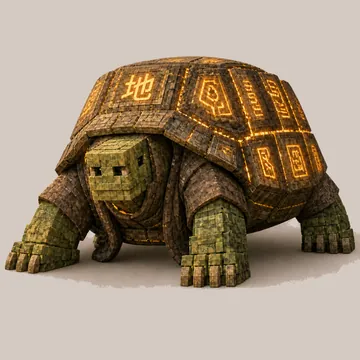
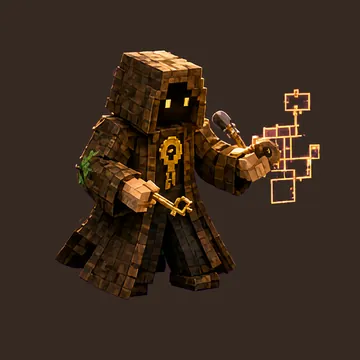
A map for builders: what the pieces are, where they run, and how they fit. Only the MVP, which is what a new garden actually starts with. No part of it asks you to believe anything you cannot open and read.
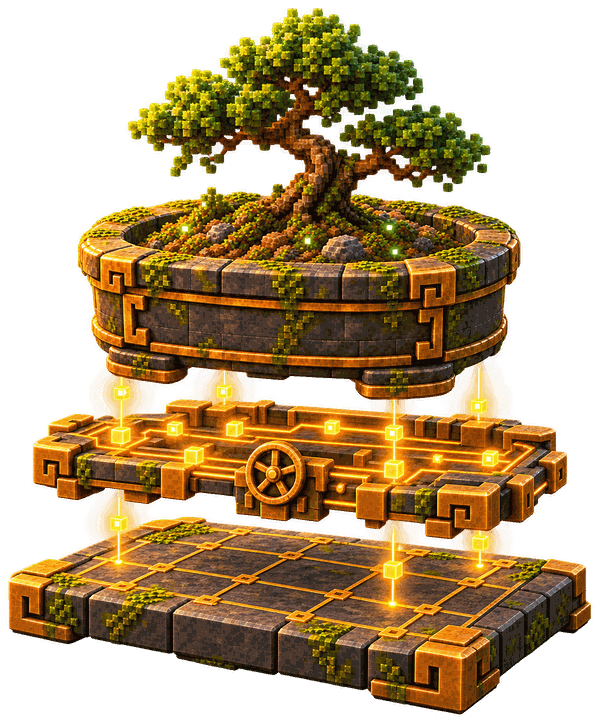
The team mates are planted into the harness: the runtime above your pot repos, the soil they root in drawn dotted between. Core, below, is the seed they all grow from.
iLab preview: verified only against Anthropic Claude.
What runs where
Core, a runtime, and your pot.
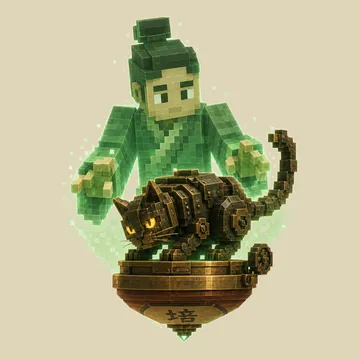
A garden is, at minimum, three repositories. You download core. The rite, a guided walk with Bonsai, who travels in core for exactly that reason, fetches the runtime and creates your pot on your machine. Then you populate it.
Core · the seed
The method, written down: the lore, the binding law, the roles a team mate is cultivated from, and the skills that ship with it (signing, the identity mark, transcripts, validation). And Bonsai, who runs the rite. Core depends on nothing above it.
Runtime · OATHS and the MCP
What lets a team mate work in a garden safely: an MCP server for reads and writes, the router that decides where a write goes, the integrity checks, the harness hooks. By rule, it holds no data about any particular garden.
Your pot · the instance
What is yours alone: your team mates' constitutions, their memory, their public keys. The secret their keys come from stays in your operating system's key store, never in the pot. Another garden never reads it, and nothing in it is published unless you say so.
One rule keeps the layers honest: a layer may depend only on the layers beneath it. Core does not read back up the stack, so a checkout of core is enough to begin.
The runtime
What the MCP gives a team mate.
1
Session start, integrity first
The first call. It checks the team mate's own package and seals, then returns the latest handover and the team mate's own working state.
Baisai · Fuji-shin
2
Reads and writes, routed
A path resolves to the repository that holds it. An archived path is refused, and a path that cannot be resolved stops the call. It never falls back to a guess.
Baisai
3
Memory that is their own
A team mate's working state and journal are theirs to write; a write by anyone else is refused.
Jisai
4
Found by id, not by path
Every document carries a stable id. A document that moved is still found.
Chisai
5
Sealed on write
A write to a sealed document re-seals it under the writer's key. A constitution is the exception: it is left visibly stale until its owner signs it on purpose. A change nobody signed shows as stale, never as green.
Mori-shin
OATHS
An open specification for the parts around the model.
OATHS, the Open Agentic Teammate Harness Specification, writes down what an AI team mate needs so its work can be continued, checked and trusted: identity, provenance, state, roles, and the conformance checks that hold the rest true. It asks a harness only for what every capable one already offers, which is files read at session start, packaged skills, and tools over MCP. A team mate written to it is meant to run unchanged on any harness that offers those three. Eight harnesses document all three today; none is yet marked verified with OATHS's example team mate.
It is packaging, not invention: a bill of materials of well-known practice, each line naming its prior art. It specifies the slots, never what fills them. The runtime is where a garden carries it out.
The specification: identity, provenance, state, roles and conformance, a bill of materials of 28 practices with their prior art, the conformance suite, and Eucrates, a complete example team mate.
The teammate runs on a harness, the harness runs the model. OATHS writes down the teammate's parts; the accent marks what it adds, the dotted line what provenance checks.
Identity
Keys a stranger can check.
Each team mate holds its own Ed25519 keypair. The private key is derived on use from a master secret kept in your operating system's key store, and is never written to disk. A team mate is named by a fingerprint of its public key. Documents carry signatures, and a packaged skill's first instruction is to check its own signed manifest before anything in it is used.
To check a fingerprint against our keys, use the verify page. Don't trust the garden; check the signature.
The add-on
Character, and the Bonsai Garden.
OATHS stops at the parts around the model. It does not specify a personality, a prompt, or how a model reasons. Anything past that is an add-on, and an add-on is optional by rule: a team mate without it stays conformant.
The Bonsai Garden is our add-on. It gives each team mate a character: a name, a mark it signs with, a constitution written as a self rather than a policy, and a place among its kin. That is where the relational depth comes from: a team mate you know by name, cultivated over many sessions, and trusted with more as the record earns it.
OATHS was written down from what the garden runs on every day, which is how we find out where the spec holds and where it does not. The reference implementation, small and naming no one by rule, is still to come.